

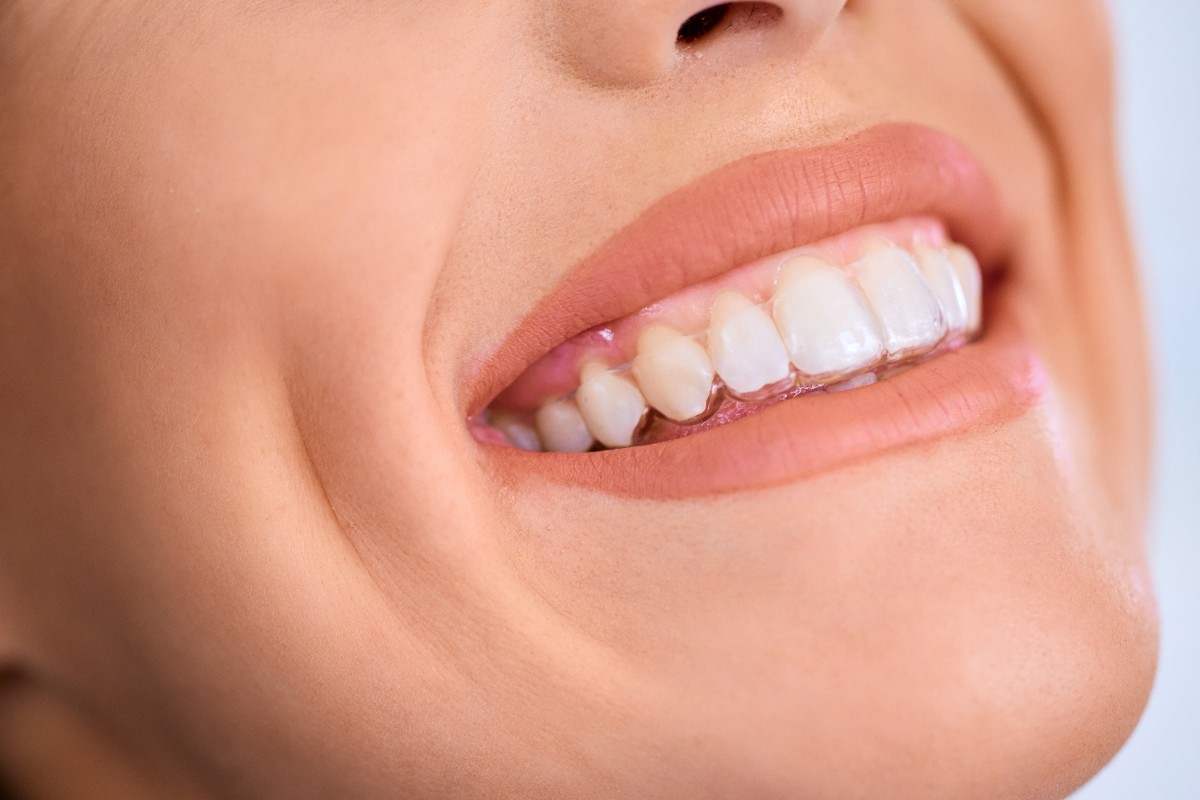
Yes, Invisalign usually works well even if you already have crowns or veneers because aligners move the entire tooth from the root, not just the visible enamel or restoration. Your dentist maps every restoration with a digital scan and adjusts attachment placement and bonding to protect porcelain surfaces.
Yes. In most cases, Invisalign works even if you already have crowns or veneers, and existing restorations rarely disqualify you from treatment. Clear aligners apply gentle pressure to the entire tooth, so a crowned or veneered tooth shifts into a better position right alongside your natural teeth.
If you already invested in a crown or a set of veneers, the good news is that Invisalign is generally compatible with that work. As a Gold Pro Invisalign provider at Pioneer Hills Dental, I plan around each restoration rather than working against it. The aligners do not know or care whether the visible surface is enamel or porcelain, because the force moving the tooth acts on the root and surrounding bone.
Extra planning comes into play when you have dental implants, multiple bridged teeth, or older restorations that are worn or leaking. These situations do not usually rule out clear aligners, but they change how I sequence movements and where I place attachments. A thorough exam and digital scan tell me exactly what I am working with before treatment begins. You can learn more about our approach on our Invisalign services page.
"I tell patients that Invisalign moves the tooth, not the crown. Your restoration is just along for the ride. My job is to map every crown and veneer digitally, then protect those surfaces while I move everything into a healthier, straighter position." - Dr. Terrance Wolbaum, DDS
Invisalign moves restored teeth the same way it moves untouched teeth: by applying controlled, sustained pressure that remodels the bone around the root. The restoration on top does not interfere with that biological process.
A common misconception is that Invisalign somehow grips or shifts only the enamel surface. In reality, each aligner is a custom shell that pushes the whole tooth, from crown to root tip. When you wear your trays 22 to 24 hours per day as I prescribe, the bone slowly reshapes,s and the tooth relocates. A porcelain veneer or full crown simply travels with the tooth it is attached to.
What determines whether a tooth can move is the health of the root and the surrounding bone, not the material on the outside. A tooth with a solid crown and healthy support moves predictably. A tooth with active gum disease or bone loss needs that problem addressed first. This is why I always check periodontal health before starting any aligner case.
Digital intraoral scanning lets me capture the exact shape of every crown and veneer and build the movement plan around them. Modern digital workflows have become a core part of accurate, predictable dentistry, giving clinicians detailed three-dimensional records of restorations before treatment planning begins, as described in a scoping review of digital dentistry capabilities. That precision is what makes treating restored teeth so reliable today.
Invisalign works well with dental crowns because a crowned tooth still has a living or treated root anchored in bone, and that root responds to aligner pressure normally.
Whether it is a single molar crown or a crown on a front tooth, the tooth moves as one unit. You will not feel the crown "lagging" the rest of your smile. The aligner hugs the crown just as it hugs a natural tooth.
Attachments are small tooth-colored bumps I bond to certain teeth to give the aligners better grip for complex movements. On a porcelain or ceramic crown, the bonding surface behaves differently than natural enamel, so I roughen and prime the surface with a ceramic-specific protocol so the attachment holds securely without harming the crown. Where possible, I plan attachments on natural teeth adjacent to a restoration to reduce reliance on the porcelain surface.
Older crowns deserve a closer look. If a crown is chipped, has a compromised margin, or shows recurrent decay underneath, I generally recommend addressing it before or shortly after aligner treatment. In some cases, we intentionally plan to replace an aging crown after straightening, so the new one fits the improved bite. Our restorative and general dentistry team coordinates that timing with your Invisalign plan.
Invisalign is compatible with porcelain veneers, and many patients straighten teeth that already carry veneers without any harm to the restorations. The key is careful attachment placement and bonding technique.
Because veneers change the shape and thickness of a tooth, I capture their exact contours in the digital scan so each aligner seats accurately. A well-fitting tray is essential for both comfort and predictable movement, and modern digital veneer workflows document these surfaces precisely, as outlined in a systematic review of digital veneer design.
Bonding an attachment to a porcelain veneer requires a different chemistry than bonding to enamel. Ceramic surfaces need specialized surface conditioning and priming for a durable bond. Research on bonding protocols for lithium disilicate veneers shows that proper surface treatment is what creates a reliable, reversible bond. When I remove attachments at the end of treatment, I polish the surface carefully to restore the veneer finish.
Veneer margins, the delicate edges where porcelain meets tooth, are areas I watch closely. I avoid placing attachments directly on a margin, and I monitor those edges at each visit. Good home care matters too, so cleaning aligners gently keeps plaque from collecting near restoration edges.
Bridges, implants, and mouths full of restorations can still be treated with Invisalign, but each requires a tailored plan because they behave differently from single natural teeth.
Dental implants are fused directly to the jawbone and do not shift under aligner pressure the way a natural, root-supported tooth does. That does not mean you cannot have Invisalign with an implant. Instead, I design the plan so the implant serves as a fixed anchor while the natural teeth around it move. Knowing exactly which teeth can and cannot move is central to the plan.
A dental bridge connects several teeth into one rigid unit, so those teeth move together rather than independently. This limits certain movements, and I account for it up front. In some cases, we plan to section or replace the bridge after alignment to achieve the ideal result.
Patients with several front crowns often assume aligners are off the table, but that is not the case. Clear aligner therapy has been documented in complex situations, including a published case report of a patient with multiple anterior crowns treated with clear aligners. It is a reassuring example that heavily restored smiles can still benefit from thoughtful aligner planning.
If you are planning new veneers, the general rule is to straighten first, then place the veneers. Aligning the teeth first lets your dentist design cosmetic work on a stable, well-positioned foundation.
When teeth are crowded, rotated, or tipped, veneers placed on top can require aggressive shaping or end up bulky. Moving the teeth into position with Invisalign first often means we can create thinner, more conservative veneers, and sometimes fewer of them. The result usually looks more natural and preserves more of your own tooth structure.
If you already have veneers you are happy with, they can typically stay put during Invisalign. The aligners move the underlying teeth, and the veneers move with them. We only plan to replace veneers if they are aging, damaged, or no longer match a newly aligned smile.
Because Dr. Wolbaum provides both Invisalign and restorative dentistry under one roof at Pioneer Hills Dental, sequencing is coordinated in a single treatment plan. You are not shuttled between offices trying to time orthodontics and cosmetics. That continuity protects both your smile and your investment.
The risks of Invisalign with existing restorations are real but manageable, and most come down to attachment bonding, restoration monitoring, and retention. Careful technique addresses each one.
Because attachments bond differently to ceramic than to enamel, I use a ceramic surface-conditioning protocol on crowns and veneers so attachments stay secure and remove cleanly when treatment ends.
At each check, I inspect crowns and veneers for chips, loose margins, or changes. Catching a small issue early keeps a restoration protected throughout treatment.
Teeth naturally drift after any orthodontic treatment. A retainer worn as directed keeps your straightened, restored smile stable and safeguards the money you spent on crowns and veneers.
Invisalign and clear aligners are prescription medical devices that should be planned and supervised by a qualified dental professional. Attempting to move teeth with restorations without a professional exam can risk your restorations and your bite. The American Dental Association and the FDA both advise against unsupervised, direct-to-consumer teeth straightening.
At your consultation, expect a digital scan, a full assessment of your crowns and veneers, and a personalized plan that tells you honestly whether Invisalign is right for your restored smile.
We start with a fast, comfortable digital scan of your teeth, no messy impressions. That scan captures every restoration in three dimensions so I can evaluate how each crown, veneer, bridge, or implant fits into your movement plan. I also review your gum and bone health, since those determine how safely teeth can move.
From there, I build a plan around your goals, whether that is closing a gap, correcting crowding, or preparing for future cosmetic work. You will see a preview of your projected outcome and get clear guidance on wear time, which I set between 22 and 24 hours per day depending on the movements involved. You can meet Dr. Wolbaum and learn about his background, or visit our Aurora office to get started.
To make treatment more affordable, Pioneer Hills Dental accepts most dental insurance plans and offers financing through CareCredit. To book your appointment, contact us or call (303) 766-8811. If you are driving in, here are directions to our office.
Get directions
Map/directions: https://maps.app.goo.gl/zRgRaN6DwCQ4rfMk6?output=embed
Dr. Terrance Wolbaum is a Family and General Dentist at Pioneer Hills Dental, proudly serving the Aurora, CO community. A graduate of the University of Colorado School of Dental Medicine, he completed a General Practice Residency at the San Francisco VA Medical Center, where he provided dedicated care to veterans.
With over 13 years of experience in the medical field, Dr. Wolbaum offers a wide range of general, restorative, and cosmetic dentistry services designed to promote optimal oral health and confident smiles. He is a certified Gold Pro Invisalign provider. This distinction reflects his advanced training and consistent record of successful Invisalign outcomes. To learn more about his background, meet Dr. Terrance Wolbaum and discover what sets his approach apart.
Frequently asked questions
Yes. Crowned teeth still have a root anchored in bone, so they respond to aligner pressure and move like natural teeth. Dr. Wolbaum maps each crown with a digital scan and, when attachments are needed, bonds them to porcelain using a ceramic-specific protocol that holds securely and removes cleanly.
Yes, attachments can bond to porcelain veneers, but the ceramic surface requires special conditioning and priming rather than the standard enamel bonding technique. Where possible, we place attachments on natural teeth near the veneer and avoid the delicate veneer margins.
When treatment is properly planned and supervised, Invisalign does not damage veneers or crowns. Aligners move the whole tooth without gripping only the porcelain, and attachments are bonded and later polished off with techniques designed to protect the restoration surface.
For most cosmetic makeovers, straightening first and placing new veneers afterward gives the best result. Aligning teeth first allows for thinner, more conservative veneers on a stable foundation. If you already have veneers you like, they can usually stay in place during treatment.
It can, with extra planning. A dental implant is fused to bone and does not move, so it serves as a fixed anchor while natural teeth move around it. A bridge moves as one rigid unit, which limits certain movements, so your dentist designs the plan accordingly.
Yes. A crown or veneer is attached to a tooth with a healthy root, so it travels with that tooth as the aligners move it into position. You will not feel your restoration lag behind the rest of your smile.
Remember: Existing crowns and veneers rarely stop you from getting Invisalign, but only a professional exam and digital scan at Pioneer Hills Dental can confirm the right plan for your smile.
Disclaimer: Results are not guaranteed, may not be permanent, and can vary per individual. This article is for educational purposes only and is not a substitute for a personalized dental evaluation. Some images may be of models, not actual patients.
Pioneer Hills Dental is a comprehensive practice where patients of all ages can receive advanced dentistry in a state-of-the-art setting. Our dentist, Dr. Terrance Wolbaum , is an active member of many prestigious dental organizations, including:
To make dentistry more affordable for families, Dr. Wolbaum proudly accepts most dental insurance plans and financing through CareCredit® . To book your appointment, request a consultation online or call our practice at (303) 766-8811 .